
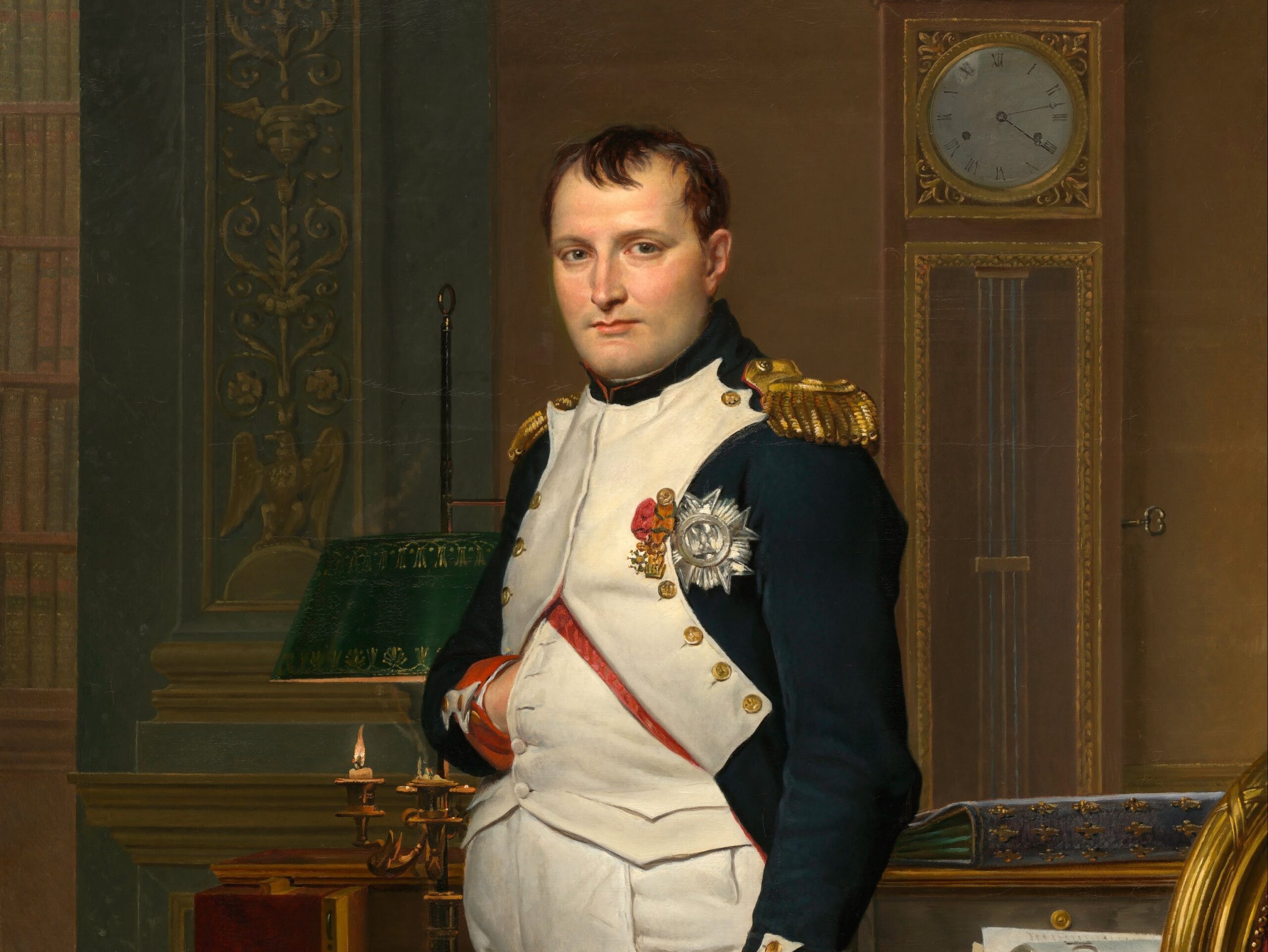
In a remarkable demonstration of artificial intelligence’s growing capabilities, OpenAI’s newest model, GPT-6 Astra, has accomplished what generations of historians and cryptographers could not: deciphering a coded military letter from Napoleon Bonaparte’s court that had remained unread for 217 years. The breakthrough offers a fascinating glimpse into both the future of AI and a critical moment in European history.
The encrypted document dates back to 1809, a period of mounting tensions between Napoleon’s French Empire and the Habsburg Empire of Austria. Sent by Eugène de Beauharnais, Napoleon’s stepson and Viceroy of Italy, to French General Auguste de Marmont, the letter contained vital intelligence regarding French and Austrian troop movements as Europe edged toward war.
For more than two centuries, the document resisted all attempts at decryption. The original cipher key had been lost, leaving historians with little more than educated guesses about its contents. The message consisted of approximately 1,300 encoded characters, including numbers, letters, and unique symbols arranged across 24 lines of encrypted text.
That changed when Carter Church, an AI engineer at cybersecurity company SentinelOne, employed OpenAI’s GPT-6 Astra model to tackle the challenge. According to reports, the AI completed the entire process in approximately six hours. Working from a scanned image of the document, the model first transcribed the symbols, compared them with previous partial decoding efforts by historians, and then applied advanced pattern-recognition techniques to reconstruct the missing portions of the cipher.
A key part of the solution involved a method known as simulated annealing, a problem-solving approach that evaluates thousands of possible combinations until coherent language emerges. By testing candidate words and comparing the results against historical French writing, the AI was able to identify both individual letters and symbols representing entire words
The decoded letter revealed detailed information about military deployments, including the positions of French, Bavarian, Polish, and Austrian forces shortly before Austria launched its campaign against Napoleon’s empire in 1809. Historians believe the message helped prepare Marmont, who was stationed in present-day Croatia, for the possibility of becoming isolated from Napoleon’s main armies as war approached
Beyond the historical significance of the discovery, the achievement highlights a rapidly emerging application for advanced AI systems. While cryptographers theoretically possessed the tools to solve the puzzle manually, the painstaking tasks of transcription, symbol cataloging, pattern matching, and linguistic analysis made the problem exceptionally time-consuming. GPT-6 Astra combined all of those disciplines into a single workflow, dramatically reducing the time required for analysi
The success also underscores the growing role of AI in historical research. What was once considered an unsolved mystery is now accessible thanks to a model capable of interpreting images, understanding language patterns, generating custom problem-solving strategies, and reasoning across multiple sources of information simultaneously. Researchers increasingly see such systems as valuable tools for unlocking lost texts, translating ancient documents, and revisiting unanswered questions from history.
The Napoleon cipher may be just one letter, but it represents something much larger. As AI continues to evolve, its ability to uncover forgotten knowledge could transform fields ranging from archaeology and linguistics to intelligence analysis and archival research. In this case, a message that remained silent for more than two centuries finally revealed its secrets, thanks to six hours of work by one of the most advanced AI systems ever built.