
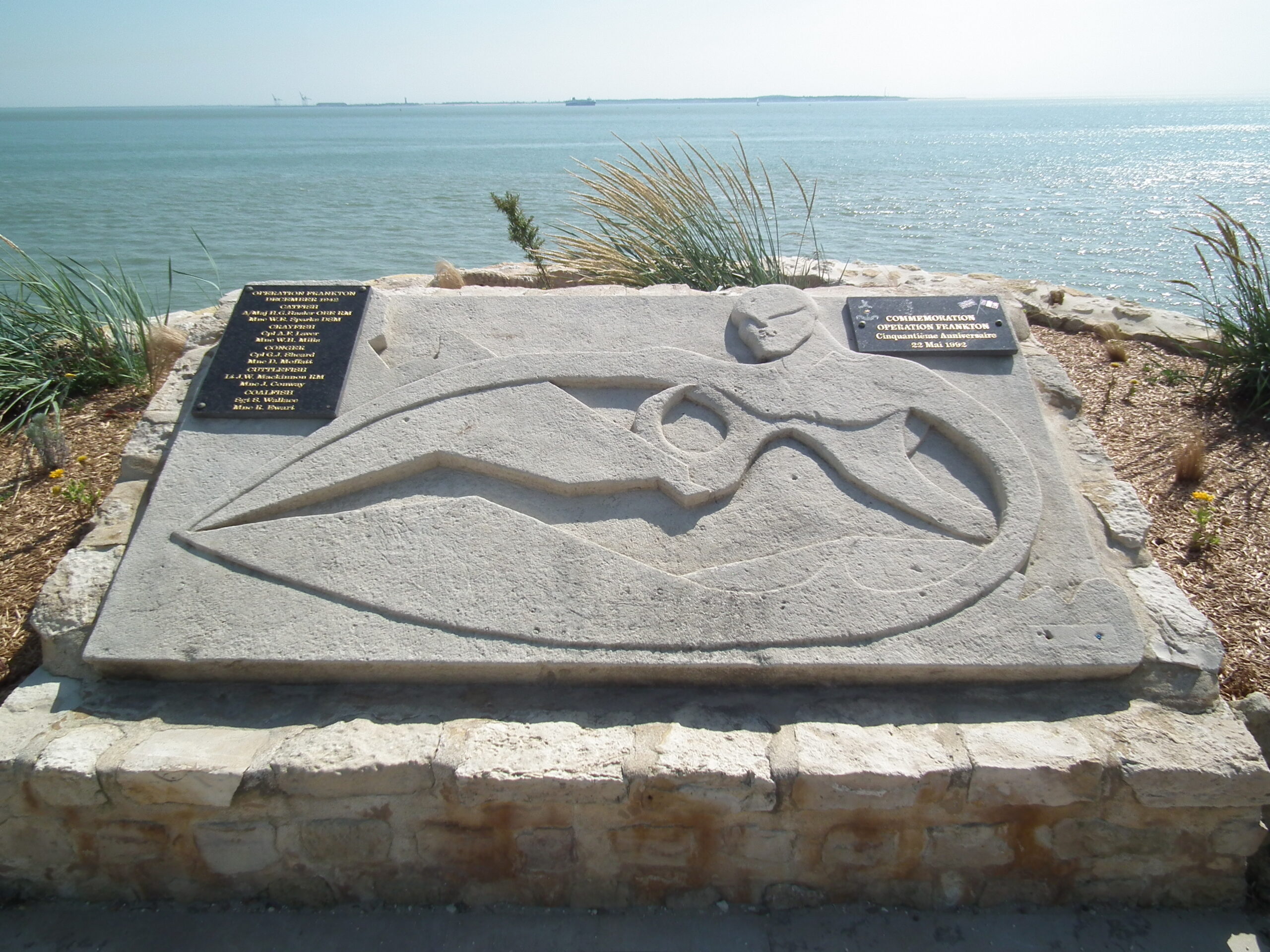
Operation Frankton remains one of the most daring and unconventional Allied raids of the Second World War. Conducted in December 1942 by a tiny team of Royal Marines, the mission targeted German shipping in the heavily defended port of Bordeaux. Using collapsible canoes and operating entirely at night, the commandos paddled more than 70 miles up the Gironde estuary, attached limpet mines to enemy vessels, and attempted to escape across occupied France. Although only two men survived, the raid inflicted meaningful damage and demonstrated the strategic value of small, highly trained special operations forces.
Strategic Context
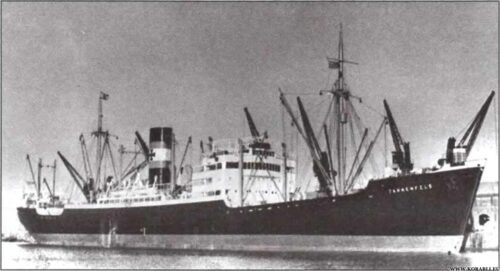
By late 1942, Bordeaux had become a critical port for Axis blockade‑runners transporting rubber, tin, and other essential materials from the Far East. The port’s location deep inland made it extremely difficult to attack. Air raids were unlikely to succeed due to heavy anti‑aircraft defenses and the risk of civilian casualties. Surface attacks were equally impractical, as the estuary was heavily patrolled and mined.
Major Herbert “Blondie” Hasler of the Royal Marines Boom Patrol Detachment (RMBPD) proposed an unorthodox solution: infiltrate the port using collapsible canoes, strike silently at night, and withdraw overland. The plan was so unconventional that many senior officers doubted its feasibility, but Hasler’s persistence secured approval.
The Team and Their Equipment
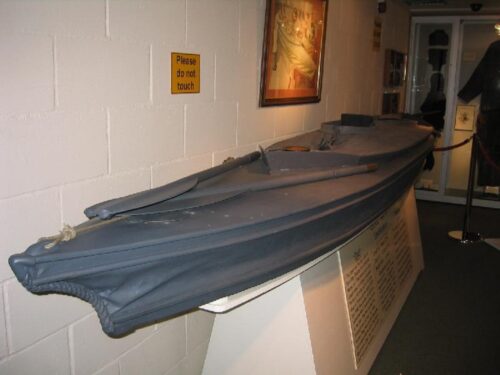
The raiding party consisted of ten Royal Marines transported by the submarine HMS Tuna. They carried six Mark II collapsible canoes—officially named Cockle Mark II and nicknamed “Cockles”—each crewed by two men. The canoes were lightweight, quiet, and nearly invisible in darkness, but they offered no protection from the elements and were extremely vulnerable to tides, currents, and enemy patrols.
The men were equipped with limpet mines, compasses, paddles, and minimal supplies. Their survival depended on stealth, endurance, and precise navigation.
The Journey Up the Gironde
On 7 December 1942, HMS Tuna surfaced near the mouth of the Gironde estuary. Heavy seas destroyed one canoe during launch and damaged another, leaving only four operational craft. The remaining teams began the long, freezing journey upriver, paddling only at night and hiding in reeds or mudbanks during daylight.
The conditions were brutal. Strong tides, cold temperatures, and constant risk of detection took a heavy toll. Two marines succumbed to hypothermia, and several others were captured by German forces. Only Major Hasler and Marine Bill Sparks ultimately reached Bordeaux.
The Attack on Bordeaux Harbor
On the night of 11–12 December, Hasler and Sparks infiltrated the harbor. Moving silently among the moored ships, they attached limpet mines to multiple vessels before withdrawing. Hours later, explosions damaged or sank several ships, disrupting Axis supply lines and forcing the Germans to divert resources to port defense.
After scuttling their canoe, the two surviving commandos began a perilous escape across France. With help from the French Resistance, they eventually reached Spain and returned to Britain.
Aftermath and Impact
Although the material damage was modest compared to large‑scale operations, Operation Frankton had significant strategic and psychological effects. It demonstrated that small, highly trained units could achieve results disproportionate to their size. The raid also forced the Germans to increase security at ports across occupied Europe, tying down troops and resources.
The men of the mission later became known as the “Cockleshell Heroes,” a name that captured both the fragility of their craft and the audacity of their actions.
Tactical Analysis of Operation Frankton
To understand why Operation Frankton succeeded despite overwhelming odds, it helps to break down the mission through a tactical lens.
1. Use of Unconventional Insertion Methods
The decision to use collapsible canoes was tactically brilliant. The Germans expected attacks from the air or sea, not from tiny craft paddling silently at night. This allowed the commandos to bypass defenses that would have defeated larger forces.
Tactical advantage: Exploited enemy blind spots and avoided predictable attack vectors.
2. Night Operations and Stealth
The entire mission depended on darkness. Paddling at night reduced the risk of detection, while hiding during the day minimized exposure. The commandos relied on silence, camouflage, and intimate knowledge of tides and currents.
Tactical advantage: Maximized concealment and minimized engagement with enemy forces.
3. Decentralized, Small‑Unit Autonomy
Each canoe team operated semi‑independently. This decentralized approach allowed the mission to continue even as teams were lost to weather, fatigue, or capture. Hasler’s leadership emphasized adaptability and initiative.
Tactical advantage: Mission resilience despite attrition.
4. Precision Targeting
Rather than attempting to destroy the port itself, the commandos focused on specific high‑value ships. Limpet mines allowed for controlled, localized damage without the collateral destruction associated with bombing.
Tactical advantage: High impact with minimal resources.
5. Psychological and Strategic Effects
The raid forced the Germans to reassess their assumptions about Allied capabilities. Ports across Europe increased security, diverting manpower and resources from other fronts.
Tactical advantage: Strategic disruption beyond the immediate physical damage.
6. High‑Risk, High‑Reward Planning
Operation Frankton accepted extreme risk in exchange for the possibility of outsized results. The commandos were trained to operate with minimal support, deep behind enemy lines, and with no guarantee of extraction.
Tactical trade‑off: High casualty probability but high strategic payoff
Final Thoughts
Operation Frankton endures as one of the most audacious small‑unit missions of the Second World War, a testament to the ingenuity, endurance, and sheer determination of the Royal Marines who carried it out. Though the physical damage inflicted on German shipping was limited, the raid’s psychological and strategic impact was far greater, forcing the Axis to divert resources and inspiring a new generation of maritime special operations.
The courage of Major Hasler, Marine Sparks, and their comrades captured the public imagination in the postwar years, eventually becoming the basis for the 1955 film The Cockleshell Heroes, which helped cement the operation’s place in military history. Today, Operation Frankton is remembered not only for its tactical innovation but also for the extraordinary bravery of the men who undertook a mission few believed could succeed.
The legacy of Operation Frankton extends far beyond the immediate impact of the raid itself. Although the Special Boat Service (SBS) had been formed earlier in the war, the Royal Marines Boom Patrol Detachment (RMBPD)—the small and highly specialized unit that carried out the mission—played a significant role in shaping the future of British maritime special operations. Many of the tactics refined by Major Hasler, including stealthy maritime insertion, covert sabotage, and small‑team autonomy, were later absorbed into the evolving doctrine of the post‑war SBS. In this sense, the daring actions of the Frankton raiders did more than damage enemy shipping; they helped influence the identity, methods, and ethos of a unit that continues to operate at the cutting edge of British special operations today.
