
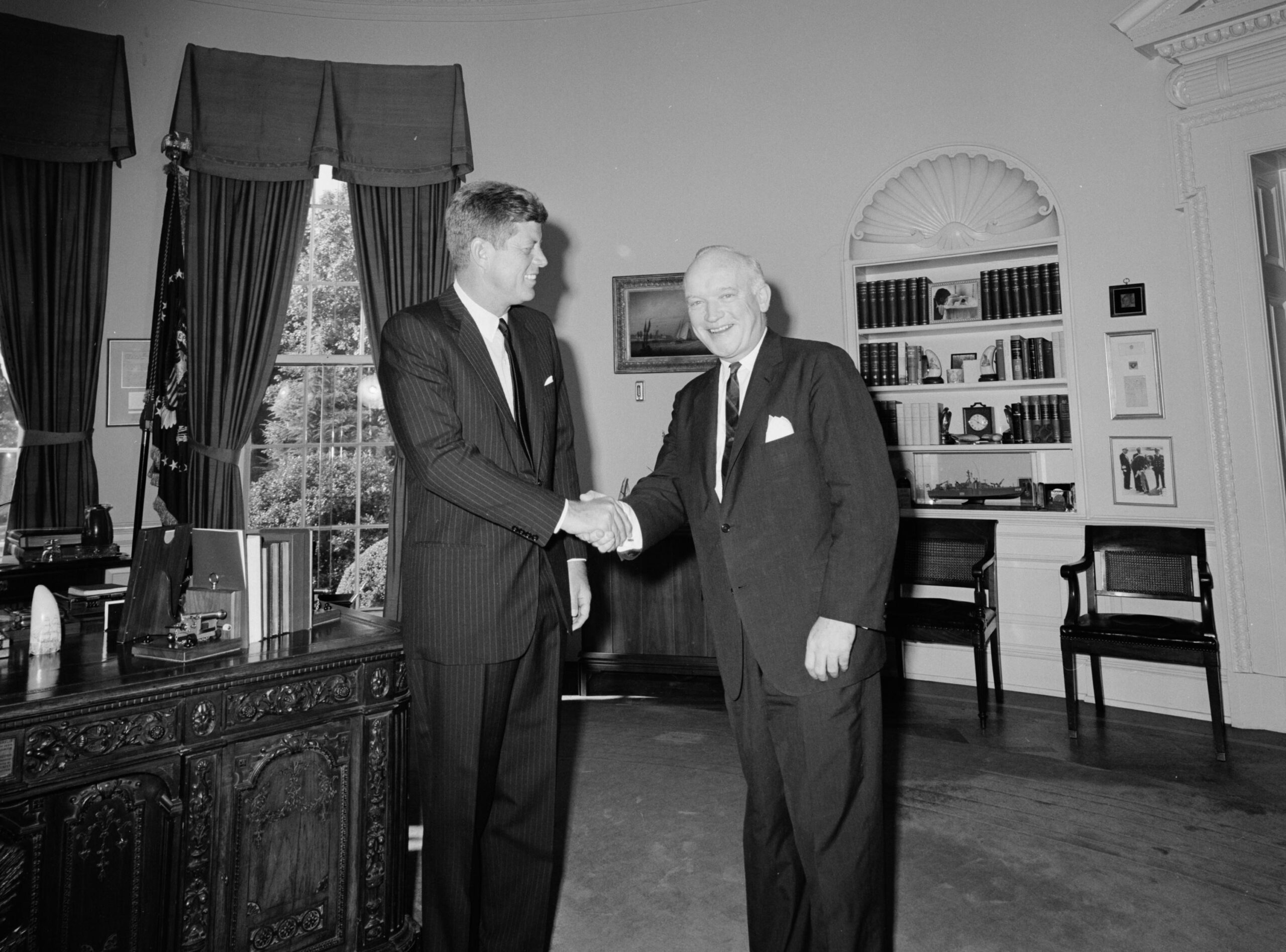
Long before Hollywood cast Tom Hanks to play him in Bridge of Spies, James Britt Donovan lived a life that seemed almost designed for the screen. He first entered the global spotlight in 1962, when he negotiated the dramatic exchange of Soviet spy Rudolf Abel for downed American U‑2 pilot Francis Gary Powers, a tense Cold War swap carried out on the Glienicke Bridge in Berlin. That achievement alone would have secured his place in history, yet it was only the prelude to the far more complex and humanitarian mission that awaited him in Cuba.
Donovan was a lawyer with a calm voice and a steady gaze, a man who preferred precision over theatrics, yet history kept placing him at the center of its most volatile moments. His greatest achievement, negotiating the release of more than 1,100 captured members of Brigade 2506 and an additional 10,000 Cuban civilians, was not the work of a diplomat or a politician. It was the work of a man shaped by the shadowy world of wartime intelligence.
The OSS Years: A School for Unconventional Thinking
Donovan’s path to Cold War diplomacy began decades earlier in the Office of Strategic Services, the wartime intelligence agency that would eventually evolve into the CIA. After joining the U.S. Navy in 1943, the Harvard‑trained lawyer was quickly recruited into the OSS, where he became General Counsel. His job placed him at the crossroads of espionage, international law, and covert operations. It was a world where nothing was simple, and everything was urgent.
Inside the OSS, Donovan learned to navigate moral gray zones, negotiate with people who did not share American values, and build trust in environments where trust was a rare commodity. He saw firsthand how information could be used as leverage, how patience could be a weapon, and how maintaining the moral high ground could be a strategic advantage. These lessons would become the foundation of his later work, though he could not have known it at the time.
The Bay of Pigs: A Crisis Without a Playbook
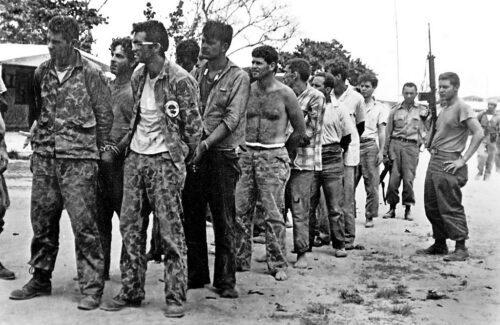
In April 1961, the failed Bay of Pigs invasion left more than 1,400 Cuban exiles in Brigade 2506 captured by Fidel Castro’s forces. The Kennedy administration faced a dilemma: how to bring the prisoners home without igniting a larger conflict. Castro demanded a staggering ransom, and the political stakes were enormous. The United States needed someone who could operate in a hostile environment, understand an adversary’s psychology, and negotiate without appearing weak.
They turned to Donovan, not because he was a diplomat, but because he was an OSS man. He understood how to read a room, how to build rapport, and how to find common ground where none seemed to exist.
Havana: A Negotiator in Enemy Territory
Beginning in 1962, Donovan traveled repeatedly to Havana, often alone, to meet with Castro. The Cuban leader was charismatic, unpredictable, and deeply suspicious of American motives. Yet Donovan approached him with the same quiet confidence he had honed during the war. He listened more than he spoke. He treated Castro with respect without conceding principles. He framed the mission not as a political negotiation but as a humanitarian one.
On one trip, Donovan brought his teenage son, a gesture that startled Castro and signaled trust in a way no diplomatic briefing ever could. The two men talked for hours, sometimes about politics, sometimes about baseball, sometimes about nothing at all. Slowly, a relationship formed.
When Castro demanded $62 million in cash, Donovan countered with a proposal that reflected his OSS‑trained creativity: $53 million in food, medicine, and medical supplies, donated by American companies and humanitarian groups. It was a solution that allowed Castro to claim a moral victory while giving the United States a politically acceptable path forward.
The Homecoming of Brigade 2506
On December 21, 1962, Donovan finalized the agreement. More than 1,100 prisoners, who the surviving members of Brigade 2506, were released and flown back to the United States. Their return was celebrated as a triumph of diplomacy and a moment of national relief. Donovan, characteristically, slipped back into quiet work, avoiding the spotlight.
On December 29, 1962, President John F. Kennedy welcomed the returning Brigade 2506 veterans at a packed ceremony in Miami’s Orange Bowl, marking their long‑awaited homecoming after months in Cuban captivity. In the years that followed, members of the brigade founded the Brigade 2506 Veterans Association, which today owns and operates the Bay of Pigs Museum & Library in Miami, preserving the history of the invasion and the stories of those who fought in it.
But Donovan’s mission was not over.
Ten Thousand More: The Forgotten Triumph
Using the trust he had built with Castro, Donovan continued negotiating for the release of Cuban civilians imprisoned after the revolution. These were political prisoners, dissidents, and families torn apart by the regime. Through persistence and patience, he secured the freedom of an additional 10,000 people. It was one of the largest humanitarian releases of the Cold War, and one of the least remembered.
This achievement, more than any other, reflected the full arc of Donovan’s life: the OSS lawyer who believed in the rule of law, the negotiator who believed in the power of dialogue, and the humanitarian who believed that even in the darkest moments, diplomacy could save lives.
A Legacy Written in Quiet Courage
James B. Donovan died in 1970, leaving behind a legacy that defies easy categorization. He was not a spy, though he worked among them. He was not a diplomat, though he accomplished what diplomats could not. He was not a politician, though he shaped the course of Cold War history. He was, above all, a negotiator who one who understood that humanity, patience, and intelligence could achieve what force often never could.
