
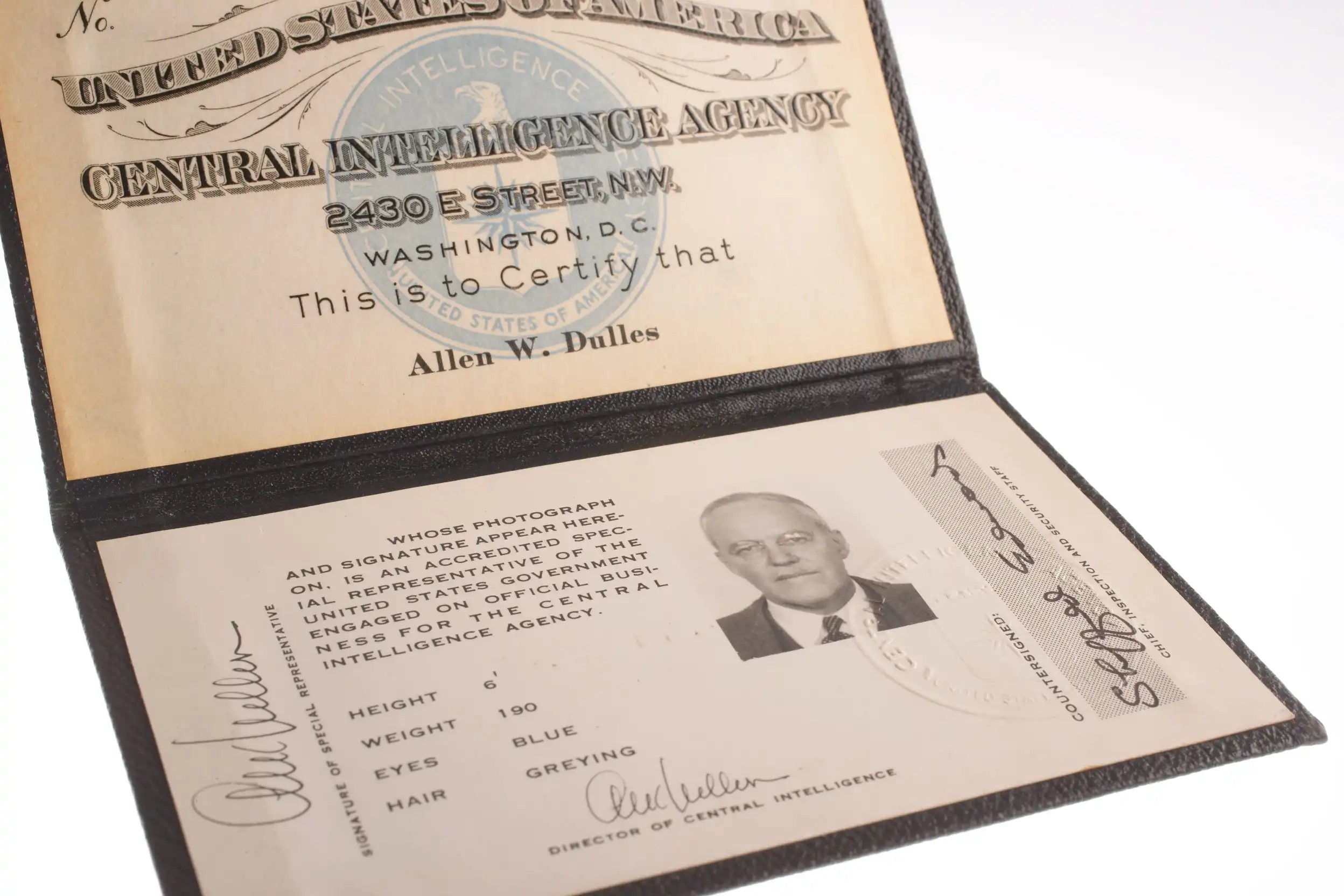
When World War II ended and the smoke cleared over Europe and the Pacific, the United States emerged as a global leader, but also as a nation facing unprecedented threats. The Soviet Union was expanding its influence, new ideological battles were taking shape, and the world was entering a dangerous era where information could be as decisive as armies. America needed a permanent intelligence service capable of protecting the nation in this new age.
Into this moment stepped Allen Welsh Dulles, a man whose vision, discipline, and unwavering belief in American ideals helped shape the CIA into the world‑class intelligence organization it would become. His story is not only the story of a single man, but of a nation determined to build the institutions necessary to defend freedom. Dulles was the first civilian to serve as Director of Central Intelligence (DCI), and he remains the longest‑serving director in the Agency’s history.
A Life Shaped by Service
Born in 1893 into a family devoted to public service, Dulles grew up with a deep sense of duty. His grandfather had been Secretary of State, and his brother, John Foster Dulles, would later hold the same position. Public service was not just a career path for the Dulles family. It was a calling.
Allen Dulles entered the Foreign Service as a young man, serving in Europe and the Middle East. These early diplomatic experiences exposed him to the complexities of global politics and the fragile balance of power that defined the early 20th century. He saw firsthand how nations rose and fell, how alliances shifted, and how information — accurate, timely information — could shape the fate of nations.
These experiences planted the seeds of his belief that America needed a professional, permanent intelligence capability. But it would take a world war to bring that belief into action.
The OSS: Where America’s Spymaster Was Forged
During World War II, Dulles joined the Office of Strategic Services (OSS), the wartime intelligence agency that would later evolve into the CIA. Stationed in neutral Switzerland, he became one of the OSS’s most effective operatives.
From his post in Bern, Dulles built a vast network of informants, resistance fighters, and anti‑Nazi contacts. He gathered intelligence that shaped Allied strategy, helped undermine the Nazi war machine, and provided early insights into the postwar political landscape. His work saved lives, shortened the war, and demonstrated the power of intelligence as a tool of national defense.
For Dulles, the lesson was unmistakable: America needed a permanent intelligence service — one capable of anticipating threats before they reached American shores.
The Birth of the CIA
In 1947, as the Cold War began to take shape, the United States passed the National Security Act, creating the Central Intelligence Agency. Dulles played a key advisory role in shaping the new organization. He believed the CIA must be more than a passive collector of information. It needed the authority to analyze global events, warn policymakers of emerging dangers, and, when necessary, take action to protect American interests.
His early influence helped define the CIA’s structure and mission. He insisted on independence from political pressure, professional standards for intelligence analysis, and the capability to conduct covert operations when diplomacy alone was insufficient.
Dulles helped ensure that the CIA would become a cornerstone of America’s national‑security strategy — a shield against threats both seen and unseen.
Director of Central Intelligence: Building America’s First Line of Defense
When Dulles became Director of Central Intelligence in 1953, the CIA was still a young agency. Under his leadership, it matured into a disciplined, globally capable intelligence service.
He expanded the Agency’s analytic capabilities, strengthened its global networks, and championed technological innovation. One of his greatest achievements was the development of the U‑2 high‑altitude reconnaissance program, which provided the United States with unprecedented insight into Soviet military capabilities.
At a time when miscalculation could lead to nuclear catastrophe, the clarity provided by U‑2 intelligence was invaluable. It helped American leaders understand the true balance of power, avoid unnecessary escalation, and maintain strategic stability.
Dulles believed that intelligence was not merely a support function — it was a strategic asset essential to national survival.
Covert Action in Defense of Freedom
The early Cold War was a time of intense geopolitical competition. Many nations were vulnerable to Soviet influence, and the United States faced the challenge of defending democracy without triggering a global conflict.
Dulles believed that covert action, used carefully and strategically, could help stabilize regions, support allies, and prevent hostile powers from gaining footholds that could threaten American security.
While some of these operations remain debated today, they reflected the patriotic conviction of the era: that America had a responsibility to stand firm against totalitarian expansion and protect the free world wherever it was threatened.
Dulles’s CIA operated with the belief that defending freedom required vigilance, courage, and the willingness to act when necessary.
Trials, Setbacks, and an Enduring Commitment
Not every chapter of Dulles’s tenure was without difficulty. The 1960 U‑2 incident, in which a reconnaissance plane was shot down over the Soviet Union, embarrassed the Eisenhower administration and exposed the risks inherent in intelligence work.
The following year, the Bay of Pigs invasion, which was a complex operation involving multiple agencies, ended in failure. Although responsibility was shared across the national‑security apparatus, President John F. Kennedy accepted Dulles’s resignation.
Yet even after leaving the CIA, Dulles continued to serve the nation, including his work on the Warren Commission. His commitment to public service never wavered.
A Patriot’s Legacy
Allen Dulles died in 1969, but the institution he helped build continues to stand as one of America’s most important defenses. His leadership transformed the CIA from a postwar experiment into a permanent pillar of national security — an agency dedicated to safeguarding the nation through vigilance, innovation, and courage.
His legacy is one of determination, ingenuity, and unwavering belief in the American mission. He helped create an intelligence service capable of meeting the challenges of a dangerous world, and his influence continues to echo through the agency’s work today.
In an era when freedom hung in the balance, Allen Dulles helped ensure that the United States would not face the future blind. He built an institution that stands watch so the nation can remain strong, secure, and free.

Resource