
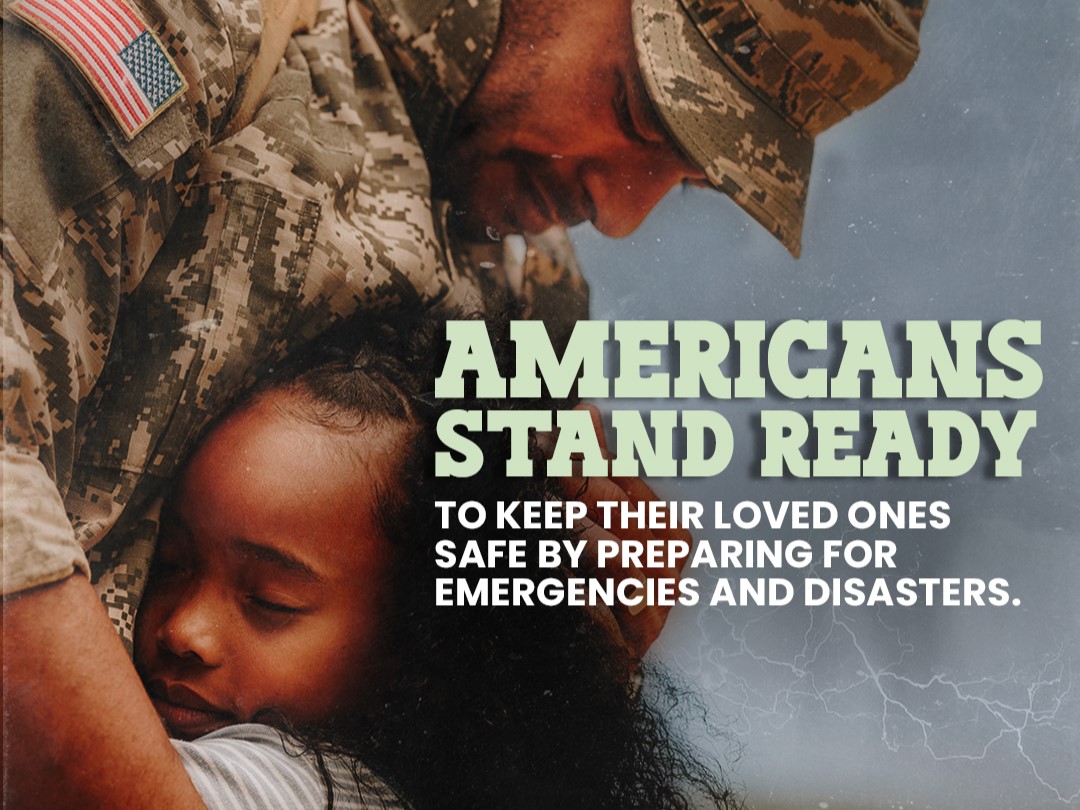
Each September, FEMA’s Ready Campaign marks National Preparedness Month, a nationwide effort encouraging Americans to take practical steps to prepare for emergencies. Since its launch in 2004, the campaign has emphasized a simple truth: small actions today can make a big difference when disaster strikes.
This year’s theme, “Americans Stand Ready,” highlights the unity, resilience, and resourcefulness that define communities across the country. It’s a reminder that preparedness isn’t just a personal choice, it’s a patriotic responsibility and a collective commitment to keeping one another safe.
Standing Ready: What the Theme Represents
The 2026 theme focuses on three core ideas that reflect how Americans protect themselves, support one another, and strengthen their communities:
- Americans stand ready to uphold our patriotic duty. When individuals are prepared and self‑reliant, they ease the burden on first responders—allowing emergency personnel to focus on those who need help most.
- Americans stand ready to protect our family and friends. No one knows your loved ones better than you do. Taking steps now ensures you can act quickly and confidently when things go wrong.
- Americans stand ready to help our communities. Preparedness is contagious. When neighbors take action—sharing resources, learning skills, and planning together—the entire community becomes more resilient.
Emergencies can happen anywhere, at any time, often without warning. National Preparedness Month is a chance to pause, reflect, and take meaningful steps to be ready.
Four Ways to Stand Ready This September
Throughout the month, the Ready Campaign is sharing easy, affordable actions that anyone can take. These steps don’t require major investments—just a bit of time and intention.
1. Be in the Know
Information saves lives. Download the FEMA App to receive real‑time emergency alerts, preparedness tips, and local resources. Knowing where to get trusted information before a crisis ensures you can act fast when it matters most.
2. Make a Family Emergency Plan
A plan should include:
- Emergency contact information
- Designated meeting places
- Medical details and special needs
- Plans for pets
- Communication strategies if cell networks are down
Writing it down, and reviewing it regularly, helps every family member understand what to do.
3. Build an Emergency Kit
A basic kit should include:
- Water and non‑perishable food
- Flashlights and batteries
- First‑aid supplies
- Medications
- Important documents
- Comfort items for children or pets
Preparedness kits don’t need to be built overnight. Add one or two items each week.
4. Be There for Your Community
Preparedness extends beyond your front door. Consider:
- Volunteering with local organizations
- Learning first aid or CPR
- Taking FEMA or American Red Cross training
- Joining a Community Emergency Response Team (CERT)
Skills like CPR, basic first aid, and disaster response training empower you to help neighbors and strengthen community resilience.
Preparedness Is Everyone’s Responsibility
National Preparedness Month is more than a campaign. It’s a call to action. When Americans stand ready, we protect not only ourselves but also our families, our communities, and the nation as a whole.
Preparedness doesn’t require perfection. It requires participation. And every step you take this September brings you closer to being ready for whatever comes next.