
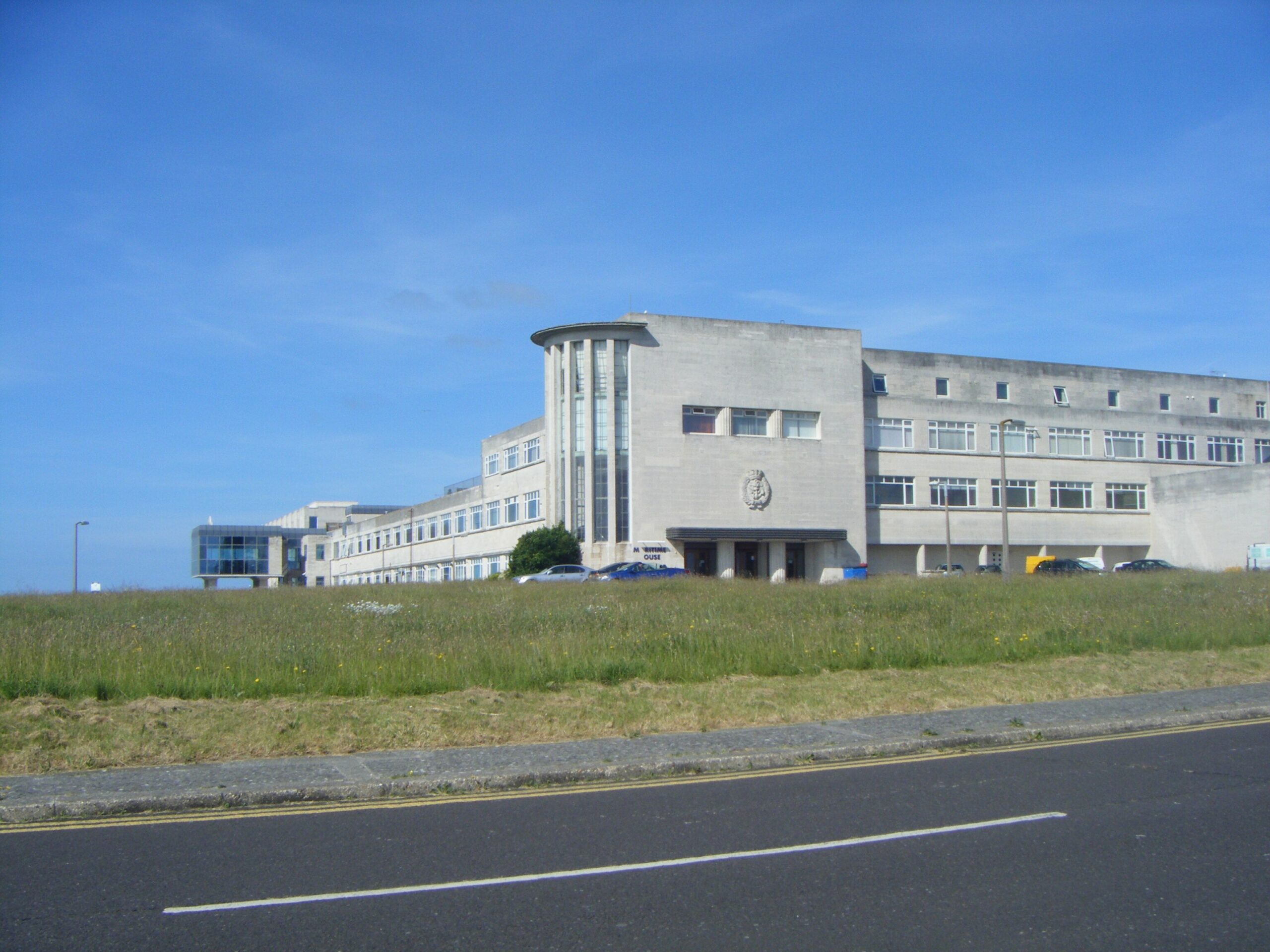
The Portland Spy Ring stands as one of the most consequential espionage cases of the Cold War, a reminder that the great ideological struggle between East and West was fought not only in Berlin, Washington, and Moscow, but also in the quiet corners of ordinary life. It’s a story of people who appeared unremarkable: clerks, neighbors, a businessman, and a friendly couple in a suburban home, yet who secretly funneled some of Britain’s most sensitive naval research to the Soviet Union. Between 1953 and 1961, this network of five agents penetrated the Admiralty Underwater Weapons Establishment (AUWE), a facility central to NATO’s underwater warfare capabilities, and passed classified documents to Moscow with a mixture of audacity, discipline, and deception that stunned British intelligence.
A Quiet Island, a Hidden War
In the early 1950s, the Isle of Portland in Dorset hardly seemed like a stage for international intrigue. Windswept cliffs, naval dockyards, and a tight‑knit local community defined the landscape. Yet nestled within this unassuming environment was AUWE, a research center devoted to underwater detection systems, sonar development, torpedo design, and anti‑submarine warfare. At a time when the Soviet submarine fleet was expanding rapidly, the work done at Portland was vital to maintaining NATO’s technological edge.
Behind the fences and laboratories, however, a breach was quietly forming. It began with a man who blended easily into the background: Harry Houghton. A former Royal Navy master‑at‑arms turned civilian clerk, Houghton had a reputation for drinking too much and complaining too loudly, but nothing that suggested he was a threat to national security. Yet Houghton carried a secret that predated his arrival at Portland. While stationed at the British Embassy in Warsaw in the early 1950s, he had been targeted and recruited by Polish intelligence, likely through a combination of flattery, pressure, and personal vulnerabilities. The Poles soon passed him to their Soviet counterparts, and by 1951 he was already supplying classified documents to the KGB.
The Making of a Spy Network
When Houghton returned to Britain and secured a clerical post at AUWE, he resumed his espionage activities almost immediately. His position gave him access to sensitive files, and his personal life soon provided him with an accomplice. Ethel “Bunty” Gee, a filing clerk at the establishment, handled classified materials daily. Whether driven by affection for Houghton, a sense of loyalty, or a quiet ideological sympathy, Gee became a willing partner in the scheme. Together, they smuggled documents out of the facility, sometimes hundreds of pages at a time, photographed them, and prepared them for transfer.
The man who received these secrets was one of the most skilled Soviet illegals of the era: Konon Molody. Operating under the identity “Gordon Lonsdale,” he posed as a Canadian businessman dealing in jukeboxes and vending machines. In reality, he was a highly trained KGB officer living without diplomatic cover, making him far more difficult for Western intelligence to detect or expel. Lonsdale met Houghton and Gee in pubs, cafés, and on London streets, always maintaining the appearance of a casual acquaintance. His charm and confidence masked a meticulous professionalism; he understood that every exchange carried enormous risk.
The final link in the chain lived far from Portland, in a quiet suburban house on Cranley Drive in Ruislip. Morris and Lona Cohen, American-born communists who had fled the United States after the exposure of the Rosenberg spy network. They had reinvented themselves as “Peter and Helen Kroger,” New Zealand antiquarian booksellers. Their home was a hub of clandestine activity. Hidden behind bookshelves and false walls were a powerful radio transmitter, a darkroom for microdot photography, and equipment for encoding and sending intelligence to Moscow. Lonsdale delivered the microfilmed AUWE documents to the Krogers, who reduced them to microdots and transmitted them to the Soviet Union.
The Net Tightens
For years, the Portland network operated with remarkable success. MI5, the Security Service responsible for counter‑espionage within the United Kingdom, had harbored suspicions about Harry Houghton as early as the mid‑1950s. Reports from colleagues about his drinking, unexplained spending, and questionable behavior during his time in Warsaw had raised red flags. Yet without concrete evidence, MI5 could not justify a full investigation, and surveillance remained sporadic. At the time, the Service was stretched thin, juggling multiple Soviet espionage threats across Britain, and its resources were often directed toward higher‑priority cases involving suspected KGB illegals.
The breakthrough came from an unexpected source: a defector. In 1959, the CIA received letters from a Polish intelligence officer using the codename “Sniper.” He was later identified as Michael Goleniewski, a high‑ranking officer with access to Soviet bloc intelligence operations. Among the information he provided was a warning that a spy was operating inside AUWE, a revelation that immediately elevated MI5’s concerns from vague suspicion to urgent national‑security crisis.
This revelation galvanized MI5. They placed Houghton, Gee, and Lonsdale under close surveillance. Agents followed Lonsdale across London, observed his meetings, and eventually traced his movements to the Kroger household in Ruislip. The pattern of contacts, combined with intercepted communications and physical surveillance, allowed MI5 to piece together the structure of the ring.
On January 7, 1961, MI5 and Special Branch officers executed a coordinated series of arrests. Lonsdale was taken into custody outside a London phone box. Houghton and Gee were detained shortly afterward. The raid on the Kroger home uncovered radio equipment, microdot materials, and incriminating documents. The scale and sophistication of the operation stunned investigators.
A Trial That Captivated the Nation
The trial at the Old Bailey quickly became a national spectacle, drawing intense public and media attention. Investigators presented an array of evidence that underscored the sophistication of the spy ring: microdots containing compressed documents, coded messages, and espionage equipment ingeniously concealed within ordinary household objects. As the case unfolded, it became clear that each member of the group had played a crucial role in the operation, and all five defendants were ultimately found guilty.
Konon Molody, operating under the alias Gordon Lonsdale, received a sentence of twenty‑five years. Harry Houghton and Ethel Gee, whose access to classified material had enabled much of the espionage, were each sentenced to fifteen years. Morris Cohen, working under the identity Peter Kroger, was given twenty‑five years, while his wife, Lona Cohen, known as Helen Kroger, received a twenty‑year sentence.
The severity of these punishments reflected the gravity of the security breach. The Admiralty Underwater Weapons Establishment was central to NATO’s underwater warfare research, and the intelligence passed to the Soviet Union offered valuable insights into British sonar and anti‑submarine capabilities at a critical moment in the Cold War.
In the years that followed, the fates of the spies diverged. Molody and the Cohens were eventually exchanged in high‑profile spy swaps between East and West, returning to the Soviet bloc as celebrated operatives. Houghton and Gee, lacking the same diplomatic value, served the majority of their prison terms before their release.
Legacy
The Portland Spy Ring left a lasting mark on British counterintelligence. MI5 strengthened vetting procedures, tightened internal security, and increased surveillance of suspected Soviet illegals. The case demonstrated the KGB’s skill at embedding deep‑cover agents and exploiting personal vulnerabilities. Most of all, it revealed how a small group of seemingly ordinary people could compromise national security at the highest levels.
The quiet streets of Portland and Ruislip have long since returned to normal, but the story of the spy ring endures. It’s a reminder that in the Cold War, the front lines could be anywhere, and the most dangerous threats sometimes wore the most familiar faces.
