
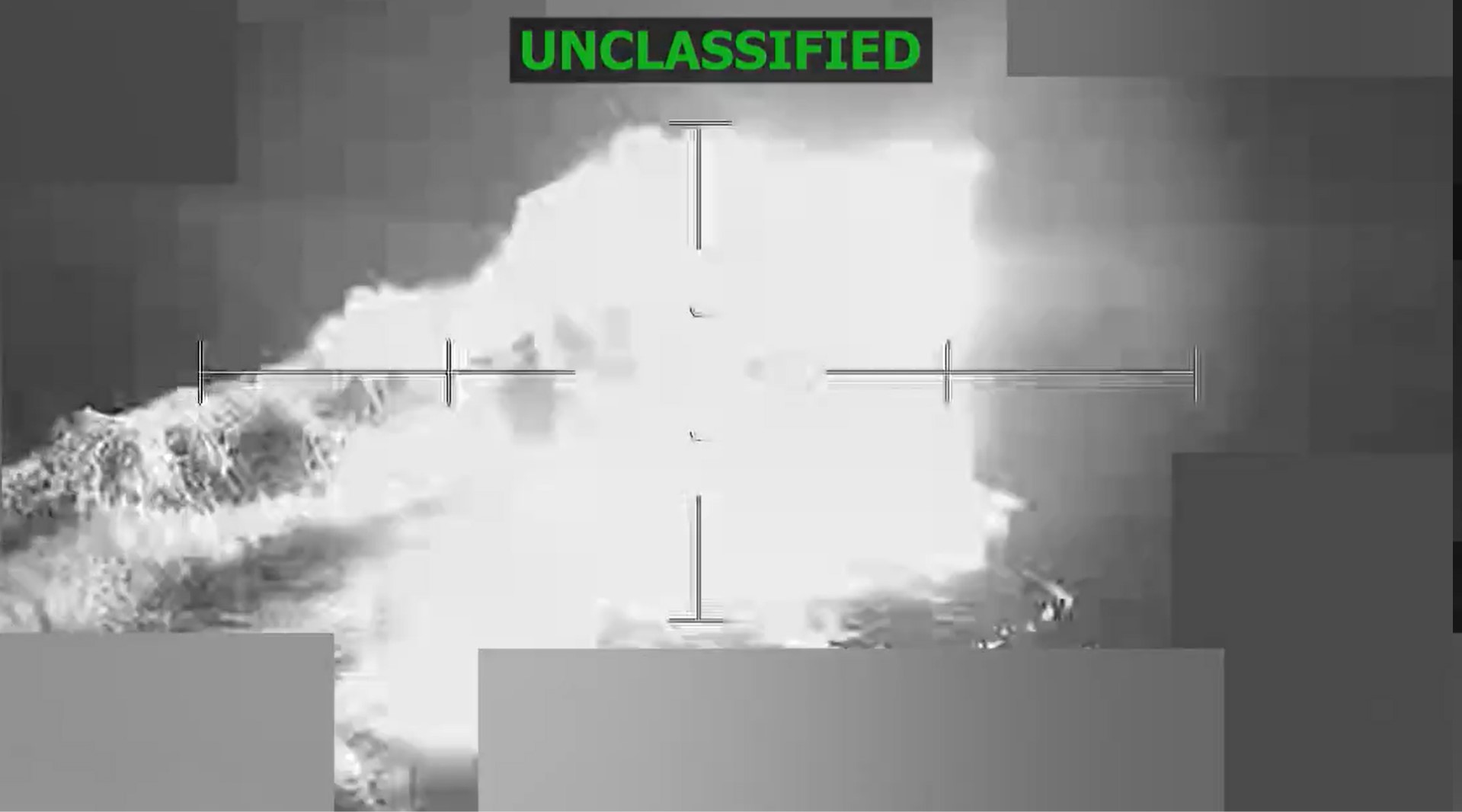
The convergence of transnational criminal organizations (TCOs) and foreign terrorist organizations (FTOs) represents a growing and complex threat to global and U.S. national security. Traditionally, TCOs have focused on profit-driven illicit activities such as drug trafficking, human smuggling, and arms dealing, while FTOs have pursued ideological or political goals through violence and insurgency. However, in recent years, these two types of organizations have increasingly collaborated, forming what is known as the crime-terror nexus. This convergence is driven by mutual benefit, operational necessity, and the exploitation of shared vulnerabilities in global governance and law enforcement.
Shared Logistical Networks
One of the primary drivers of this nexus is the use of shared logistical networks. Smuggling routes originally developed for narcotics and contraband are now being utilized by terrorist groups to move personnel, weapons, and resources across borders. In many cases, TCOs provide the infrastructure and expertise, while FTOs offer access to unstable regions and ideological cover. These routes often traverse porous borders and conflict zones where state control is minimal, allowing both types of organizations to operate with relative impunity. The overlap in logistics not only facilitates the movement of goods and people but also fosters operational interdependence that strengthens both criminal and terrorist capabilities.
Financial Interdependence
Financial interdependence is another critical factor in the crime-terror nexus. Terrorist organizations often rely on criminal enterprises to fund their operations, engaging in activities such as drug trafficking, kidnapping for ransom, and extortion. These revenue-generating mechanisms are essential for sustaining terrorist campaigns, especially in the face of international sanctions and counterterrorism efforts that restrict access to formal financial systems. TCOs, in turn, benefit from the protection and territorial access provided by FTOs, particularly in regions where insurgent groups exert control. This symbiotic relationship allows both entities to thrive in environments where state authority is weak or absent, creating zones of impunity that undermine national and international security frameworks.
Case Studies of Collaboration
Several case studies illustrate the operational overlap between transnational criminal organizations (TCOs) and foreign terrorist organizations (FTOs), highlighting the fluidity and adaptability of the crime-terror nexus. One prominent example is Hezbollah’s involvement in illicit activities in Latin America. The group has been linked to drug trafficking, money laundering, and contraband smuggling, particularly in the Tri-Border Area (TBA) of Argentina, Brazil, and Paraguay. While Hezbollah’s direct operational control in the region remains debated, evidence suggests it leverages local criminal networks and diaspora communities to facilitate financial operations that support its global agenda (Levitt, 2013; Naim, 2023). These activities demonstrate how ideologically motivated actors can embed themselves within illicit economies to sustain long-term campaigns.
Similarly, Mexican drug cartels such as the Jalisco New Generation Cartel (CJNG) and remnants of the once-powerful Los Zetas have adopted tactics commonly associated with insurgent and terrorist groups. These include the use of improvised explosive devices (IEDs), military-grade weaponry, and paramilitary structures. Though their motivations are primarily profit-driven, their strategic use of violence, propaganda, and territorial control mirrors insurgent behavior and complicates law enforcement responses (Felbab-Brown, 2020). This convergence of tactics blurs the line between organized crime and terrorism, challenging traditional threat categorizations and necessitating more nuanced countermeasures.
In conflict zones such as Syria and Iraq, groups like Al-Qaeda and ISIS have exploited black-market economies and transnational smuggling routes to sustain their operations and expand their influence. ISIS, in particular, generated substantial revenue through the illicit trade of oil, antiquities, and weapons during its territorial control, bypassing international sanctions to fund its military and propaganda campaigns (Shelley, 2014; UNODC, 2020). Al-Qaeda has similarly relied on criminal enterprises, including kidnapping for ransom and trafficking, to support its decentralized network. The ability of terrorist organizations to adapt and integrate into existing criminal infrastructures underscores the resilience of the crime-terror nexus and its capacity to persist despite global counterterrorism efforts.
National Security Implications
The fusion of criminal and terrorist networks presents significant challenges to national security. One major implication is the blurring of threat categories, which complicates the work of law enforcement and intelligence agencies. Traditional frameworks that separate criminal and terrorist threats are increasingly inadequate in addressing hybrid actors that operate across both domains. This convergence necessitates a reevaluation of legal definitions, operational protocols, and interagency coordination mechanisms. Agencies must develop integrated approaches that combine counterterrorism and organized crime strategies, leveraging shared intelligence and joint task forces to dismantle interconnected networks.
Another challenge is the increased complexity of interdiction efforts. The decentralized and transnational nature of TCOs and FTOs makes it difficult to disrupt their operations without coordinated international action. These groups often operate in jurisdictions with limited law enforcement capacity, exploiting legal loopholes and jurisdictional boundaries to evade detection. The use of encrypted communications, digital currencies, and online marketplaces further complicates efforts to track and intercept illicit activities. As a result, national security agencies must invest in advanced technological capabilities and foster international partnerships to enhance their operational reach and effectiveness.
The crime-terror nexus also poses direct threats to homeland security. TCOs operating near U.S. borders, such as Mexican cartels, may facilitate terrorist infiltration or provide logistical support to FTOs seeking access to the United States. The potential for terrorists to exploit criminal routes into the U.S. heightens the risk of domestic attacks and necessitates robust border security measures. Additionally, the presence of criminal-terrorist networks within diaspora communities can create vulnerabilities that are difficult to detect and address without infringing on civil liberties. Balancing security and civil rights remains a critical challenge in countering the domestic implications of the crime-terror nexus.
Designation of Cartels as FTOs
The designation of cartels as FTOs reflects the recognition that their activities extend beyond traditional criminal enterprises into the realm of national security threats. Mexican cartels such as the Sinaloa Cartel, Cártel de Jalisco Nueva Generación (CJNG), and Cártel del Noreste have been formally designated as FTOs by the U.S. State Department in 2025, alongside other transnational groups like Tren de Aragua and Mara Salvatrucha (MS-13). This action is justified by their use of terror-like tactics, including mass killings, beheadings, and indiscriminate violence against civilians, which mirror the operational methods of established terrorist organizations. Moreover, cartels exert political influence through intimidation and corruption, undermining state authority and destabilizing governments in the Western Hemisphere.
By designating cartels as FTOs, the U.S. gains expanded legal tools, such as enhanced sanctions, asset freezes, and material support prohibitions, that strengthen law enforcement and intelligence agencies’ ability to dismantle their networks. The designation also facilitates international cooperation, as partner nations are compelled to treat these cartels not merely as organized crime groups but as terrorist entities, thereby aligning counterterrorism and counternarcotics strategies. Ultimately, this policy underscores the reality that cartels pose a dual threat: they endanger public safety through narcotics trafficking while simultaneously eroding regional stability through terroristic violence and corruption, warranting their classification as FTOs
Strategic Responses
Strategic responses to the crime-terror nexus must be multifaceted and adaptive. Intelligence integration is essential, with fusion centers that combine criminal and counterterrorism intelligence playing a pivotal role. These centers facilitate real-time data sharing across agencies and jurisdictions, improving situational awareness and operational coordination. Financial disruption strategies, such as sanctions, asset freezes, and anti-money laundering initiatives, can target shared funding streams and weaken the economic foundations of criminal-terrorist networks. International cooperation, including joint task forces, extradition treaties, and shared intelligence platforms, enhances the ability to dismantle transnational networks and prosecute key actors.
Legal and policy reform is also necessary to reflect the hybrid nature of these threats. Updating legal frameworks to encompass criminal-financed terrorism and expanding jurisdictional authority for transnational investigations can improve prosecutorial outcomes. Moreover, investing in community resilience, through education, economic development, and governance reform, can reduce the appeal of both criminal and terrorist recruitment. Addressing root causes is essential for long-term stability and the prevention of future convergence.
Law Enforcement Strategies
Effectively combating the convergence of TCOs and FTOs requires a multidimensional strategy that integrates intelligence, interagency coordination, and proactive disruption. In the United States, several operational and institutional mechanisms have been developed to address this hybrid threat. Among the most critical are fusion centers, financial intelligence units, and joint task forces that bridge the gap between criminal and counterterrorism domains.
Fusion centers are a cornerstone of the U.S. strategy to detect, prevent, and respond to threats that span criminal and terrorist activity. Established in the aftermath of 9/11, these centers serve as collaborative hubs where federal, state, local, tribal, and territorial agencies share intelligence in real time. As of 2025, there are over 80 fusion centers nationwide, each tailored to regional threat profiles. These centers enable cross-domain intelligence synthesis, allowing analysts to integrate data from criminal investigations, counterterrorism operations, and open-source intelligence to identify patterns indicative of nexus activity. They also facilitate rapid threat dissemination across jurisdictions and engage with private sector partners, such as financial institutions and infrastructure operators, to detect illicit activity linked to TCOs and FTOs. For senior law enforcement leadership, maintaining strong liaison roles with fusion centers and investing in personnel training are essential to maximizing their utility.
Joint task forces further enhance the national response by operationalizing interagency collaboration. Entities such as the FBI’s Joint Terrorism Task Forces (JTTFs) and the DEA-led Special Operations Division bring together investigators, analysts, and prosecutors from multiple disciplines to target overlapping criminal-terrorist networks. These task forces enable unified investigations that span both criminal and terrorism statutes, allowing for more comprehensive case development and enhanced prosecutorial leverage. Resource pooling across agencies, such as surveillance assets, forensic capabilities, and legal expertise—strengthens operational effectiveness. Senior law enforcement executives should prioritize participation in these task forces and advocate for robust deconfliction protocols to ensure coordination and avoid duplication.
Disrupting the financial lifelines of TCOs and FTOs is another strategic imperative. Agencies such as the Financial Crimes Enforcement Network (FinCEN) and the Office of Foreign Assets Control (OFAC) play pivotal roles in tracking and sanctioning entities that facilitate criminal-terrorist financing. Law enforcement agencies can support these efforts by training personnel in financial investigations, including money laundering typologies and cryptocurrency tracing. Suspicious Activity Reports (SARs) filed by financial institutions often contain indicators of convergence, such as structured transactions linked to known terrorist facilitators. Building partnerships with banks and fintech firms enhances early detection and reporting of suspicious activity, enabling more timely interventions.
Technology and data analytics are increasingly vital in identifying nexus activity hidden within vast datasets. Advanced analytic platforms can fuse criminal and counterterrorism data to accelerate threat identification, while digital forensics capabilities allow investigators to extract and interpret data from seized devices. The use of artificial intelligence to analyze social media, encrypted communications, and transaction patterns can reveal connections between criminal and terrorist actors that would otherwise remain obscured. Senior management should consider investing in these technologies while ensuring compliance with privacy laws and civil liberties to maintain public trust.
Addressing the crime-terror nexus in the United States demands a comprehensive and adaptive approach. Fusion centers, joint task forces, financial intelligence, and advanced analytics form the backbone of the national response. Success depends on sustained interagency collaboration, investment in training and technology, and a commitment to strategies that reflect the evolving nature of hybrid threats. For senior law enforcement leadership, aligning resources and priorities across jurisdictions is essential to disrupting the convergence of criminal and terrorist networks and safeguarding national security.
Final Thoughts
The nexus between TCOs and FTOs represents a dynamic and evolving threat to national and international security. As these entities continue to adapt and collaborate, traditional security paradigms must evolve in response. A holistic approach, integrating law enforcement, intelligence, diplomacy, and community engagement, is essential to counter this convergence effectively. Understanding the crime-terror nexus is not merely an academic exercise; it is a strategic imperative for safeguarding global stability and protecting national interests.
References
Felbab-Brown, V. (2020). The concept of narco-insurgency and its relevance to Mexico. Brookings Institution. https://www.brookings.edu
Levitt, M. (2013). Hezbollah: The global footprint of Lebanon’s party of God. Georgetown University Press.
Naim, M. (2023). The illicit: How smugglers, traffickers, and copycats are hijacking the global economy. Knopf.
Shelley, L. I. (2014). Dirty entanglements: Corruption, crime, and terrorism. Cambridge University Press.
United Nations Office on Drugs and Crime (UNODC). (2020). World drug report 2020. https://www.unodc.org/unodc/en/data-and-analysis/wdr2020.html
The appearance of U.S. Department of War (DoW) visual information does not imply or constitute DoW endorsement.