
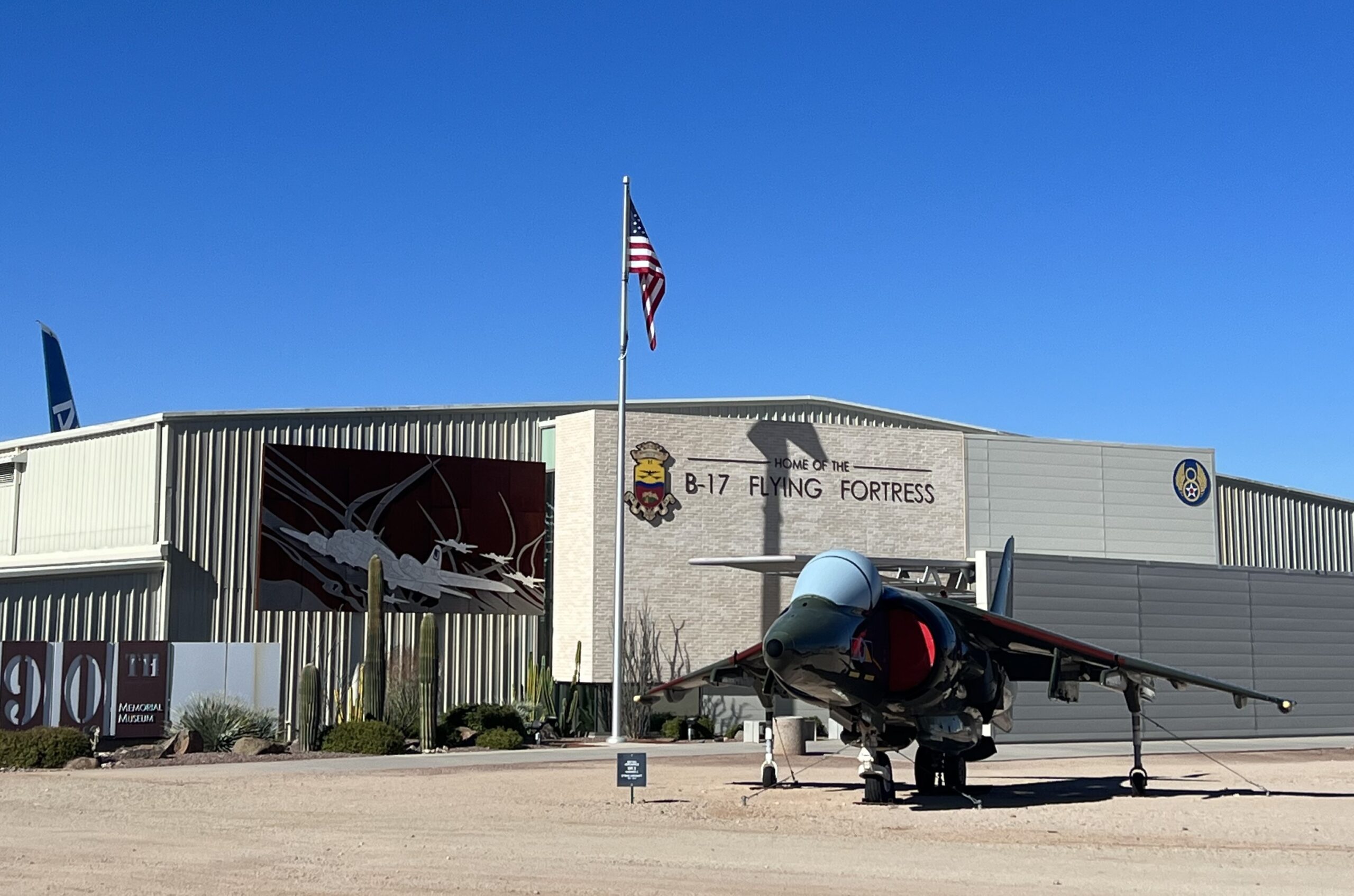
Nestled in the desert landscape of Tucson, Arizona, the Pima Air & Space Museum stands as one of the largest non-government-funded aerospace museums in the world. Covering more than 80 acres of outdoor space and 250,000 square feet of indoor hangars, the museum houses an extraordinary collection of over 400 aircraft and thousands of artifacts. It is not merely a repository of machines; it is a living chronicle of human ingenuity, ambition, and the relentless pursuit of flight.
Origins and Mission
The museum was founded in 1976 with a vision to preserve aviation history and inspire future generations. Unlike many aerospace museums, Pima operates independently, relying on donations, ticket sales, and community support rather than government funding. Its mission is to “create unlimited horizons in aerospace education through the preservation and presentation of the history of flight.” This independence has allowed the museum to curate a diverse collection, ranging from fragile early biplanes to massive Cold War bombers, and even spacecraft.
A Journey Through Time
Walking through the museum is akin to stepping into a time machine. The exhibits are organized both chronologically and thematically, offering visitors a sweeping view of aviation’s evolution.
Early Flight
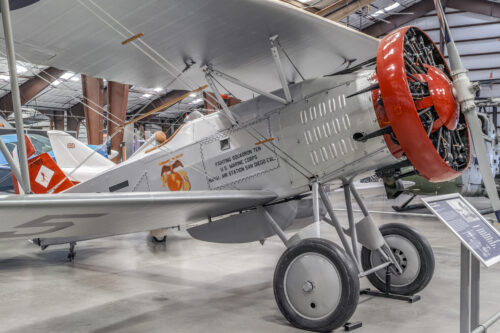
The story begins with early flight, where replicas of the Wright Flyer and other pioneering aircraft highlight the daring experiments of aviation’s infancy. Barnstorming biplanes and early military trainers emphasize the rapid development of flight in the early 20th century.
World War II
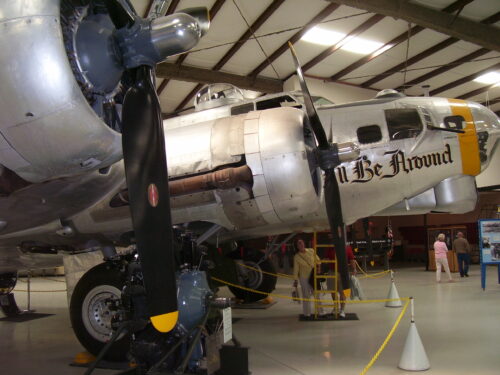
World War II occupies a central place in the museum’s narrative. Iconic aircraft such as the B-17 Flying Fortress, B-24 Liberator, and P-51 Mustang stand as reminders of the conflict’s aerial battles. The 390th Memorial Museum, located on-site, is dedicated to the 390th Bombardment Group, which flew B-17s in Europe. This memorial provides a deeply personal look at the sacrifices and triumphs of airmen during the war, blending historical artifacts with human stories.
Cold War and Beyond
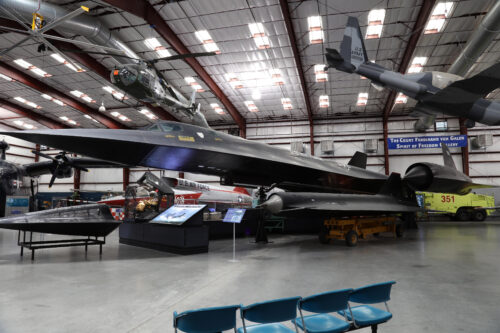
The Cold War era is represented by towering giants like the B-52 Stratofortress, a symbol of nuclear deterrence and long-range bombing capability. Visitors can also marvel at the SR-71 Blackbird, the legendary reconnaissance aircraft capable of flying at Mach 3. Presidential aircraft, including a retired Air Force One, offer a glimpse into the intersection of aviation and politics, while fighter jets such as the F-14 Tomcat and F-4 Phantom II showcase the technological leaps in aerial combat during the late 20th century.
Modern and Experimental Aircraft
Beyond military aviation, the museum also explores experimental craft and helicopters, illustrating the breadth of aerospace innovation from vertical lift to stealth technology.
Space Exploration
Space exploration is another highlight, with exhibits that include spacecraft models, astronaut gear, and educational displays connecting the story of flight to humanity’s ventures beyond Earth.

Layout and Visitor Experience
The museum is divided into five indoor hangars and expansive outdoor displays. Each hangar focuses on specific themes, from early flight and World War II aircraft to Cold War jets, experimental designs, and space exhibits. Outdoors, large bombers, cargo planes, and helicopters are spread across the desert landscape, creating an awe-inspiring experience. Visitors often describe the museum as overwhelming yet exhilarating, with the sheer scale of aircraft like the B-52 or the sleek lines of the SR-71 evoking both awe and respect for human achievement.
Education and Community Role
Education is central to Pima’s mission. The museum hosts guided tours led by knowledgeable docents, many of whom are retired pilots or engineers. School programs are designed to spark interest in STEM (Science, Technology, Engineering, and Mathematics) fields, while hands-on exhibits and multimedia presentations make complex aerospace concepts accessible to all ages. By engaging with the community, the museum ensures that aviation history is not just preserved but actively taught and celebrated.
Connection to the “Boneyard”
Adjacent to the museum lies Davis-Monthan Air Force Base, home to the p (AMARG), commonly known as the “Boneyard.” This facility stores and maintains thousands of retired military aircraft. While technically separate, Pima offers bus tours of the Boneyard, giving visitors a rare glimpse into this vast resting place of aviation giants.

Notable Exhibits
Beyond the aircraft highlighted in the chronological journey, the museum also features several distinctive exhibits that stand out for their rarity or cultural significance. One such treasure is the Martin PBM Mariner, a large seaplane used extensively during World War II for patrol and rescue missions. Few examples of this aircraft survive today, making it a rare sight in any collection.
Another highlight is the Super Guppy, a bulbous cargo aircraft designed to transport oversized components such as spacecraft modules. Its unusual shape and role in the Apollo program make it a favorite among visitors interested in space history.

The museum also houses the Boeing 787 Dreamliner prototype, representing the cutting edge of modern commercial aviation. This aircraft showcases advances in composite materials and fuel efficiency that continue to shape the airline industry today.
For helicopter enthusiasts, the Sikorsky CH-54 Tarhe “Skycrane” is an impressive exhibit. This heavy-lift helicopter was designed to carry massive loads, including vehicles and even prefabricated buildings, demonstrating the versatility of rotary-wing technology.
The museum’s collection also includes international aircraft such as the Mikoyan-Gurevich MiG-29 Fulcrum, a Soviet-designed fighter jet that provides visitors with a Cold War perspective from outside the United States. Exhibits like this broaden the museum’s scope, offering a global view of aviation history.
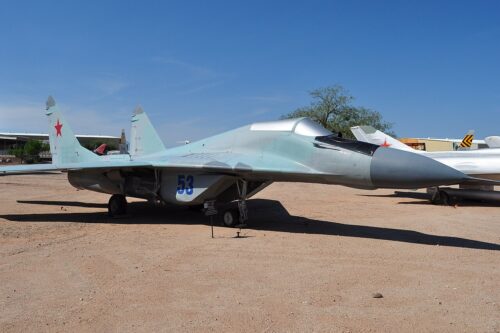
Soviet Air Force Mikoyan-Gurevich MiG-29 (9-13) on display at Pima Air & Space Museum. (Image: Eric Salard vis Wikimedia / CC BY-SA 2.0)
Cultural and Historical Significance
The Pima Air & Space Museum is more than a collection of machines; it is a cultural landmark. It tells stories of courage, innovation, and sacrifice. In Tucson, the museum has become a major tourist attraction, drawing visitors from around the world. Its proximity to natural wonders like Saguaro National Park enhances its appeal, blending technological marvels with Arizona’s desert beauty.
Final Thoughts
With its vast collection, immersive exhibits, and dedication to education, the Pima Air & Space Museum offers visitors not just a look at aircraft but a profound journey through history. From the fragile wings of the Wright Flyer to the sleek fuselage of the SR-71, the museum encapsulates the spirit of exploration that defines us. For aviation enthusiasts, history buffs, or families seeking inspiration, It’sa portal to the skies, where the past, present, and future of flight converge.
