
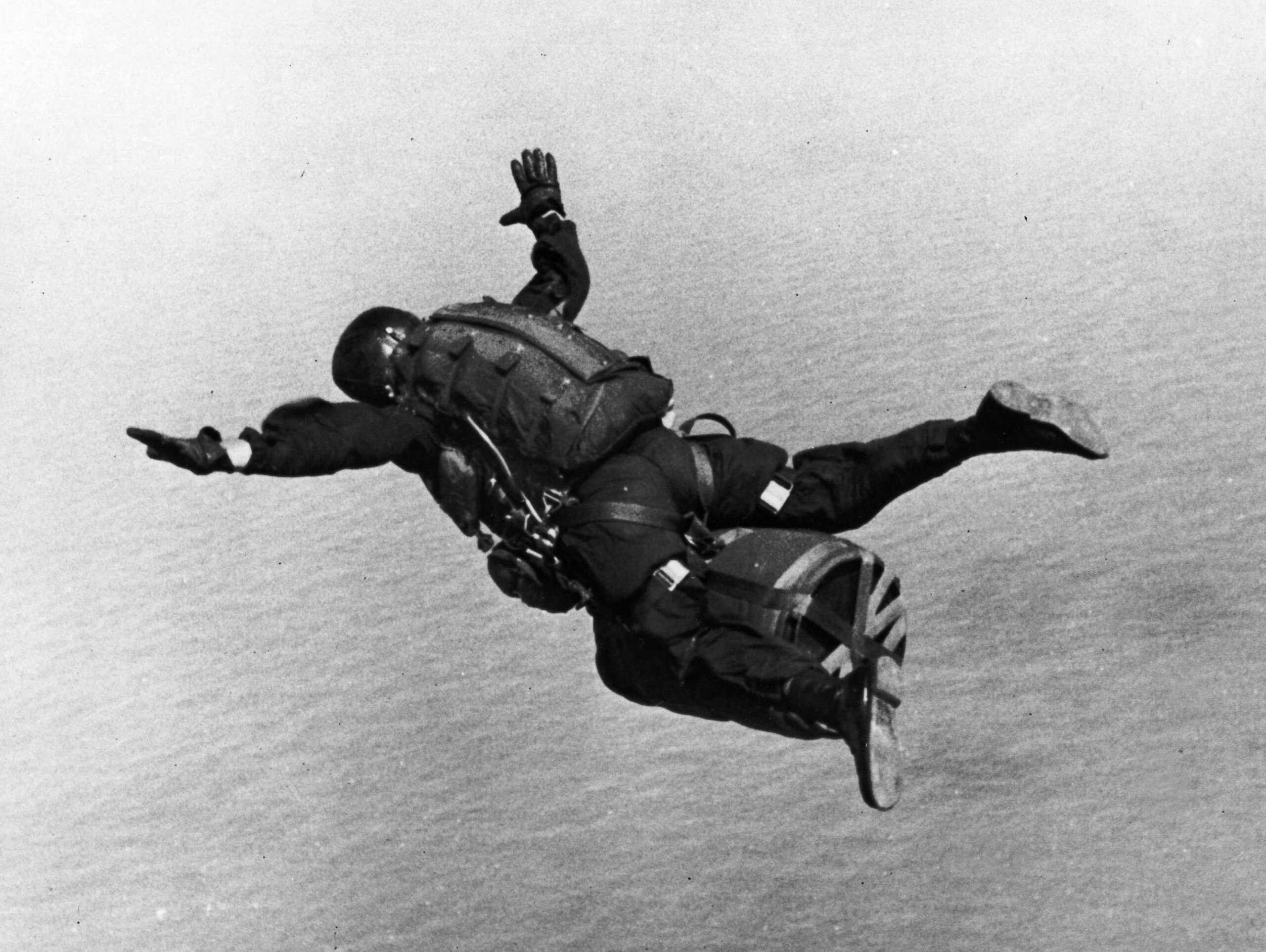
During the most intense decades of the Cold War, the United States developed a range of unconventional nuclear capabilities designed to deter or slow a potential Soviet invasion of Western Europe. Among the most secretive of these initiatives were the Green Light Teams, elite U.S. Special Forces units trained to deploy the Special Atomic Demolition Munition (SADM), a compact nuclear device small enough to be carried by a single operator. These missions were conceived as last‑resort operations, intended to destroy critical infrastructure behind enemy lines and delay the advance of Warsaw Pact forces. For decades, the existence of these teams remained hidden behind layers of classification, and only in the 1980s did the public begin to learn about the extraordinary risks and strategic logic behind this program.
Origins and Purpose of the Green Light Teams
The Green Light Teams emerged in the early 1960s, a period marked by escalating nuclear tensions and the rapid expansion of both NATO and Warsaw Pact military capabilities. The U.S. Army Special Forces—already known for their unconventional warfare expertise—were selected to form specialized units capable of infiltrating deep into enemy territory to deploy portable nuclear demolition charges. These teams were composed primarily of Green Berets, though Navy SEALs, Marine reconnaissance units, and Army combat engineers also participated in related training and mission planning.
The purpose of the Green Light Teams was straightforward but extreme: in the event of a Soviet invasion of Western Europe, they would covertly insert themselves behind advancing enemy lines and emplace SADMs at key chokepoints. These targets included mountain passes, tunnels, major bridges, transportation hubs, and industrial facilities whose destruction could significantly slow or redirect Soviet armored formations. The missions were understood to be extraordinarily dangerous, and the likelihood of survival after detonation was considered low. Operators volunteered knowing that escape and recovery were improbable.
The Special Atomic Demolition Munition
At the center of this strategy was the SADM, a compact nuclear device derived from the W54 warhead. Although the SADM is sometimes referred to by the designation “B54,” this does not indicate a different warhead. The W54 refers to the nuclear explosive package itself, while “B54” was the official bomb designation for the complete SADM system, including its casing and firing components. No alternate warheads were ever used in the SADM program.
The W54 was one of the smallest nuclear warheads ever produced by the United States, with yields ranging from sub‑kiloton levels to approximately one kiloton depending on configuration. The SADM was designed to be man‑portable, typically carried in a backpack‑like container or protective casing. Its small size allowed for delivery by parachute, underwater insertion, or covert ground movement.
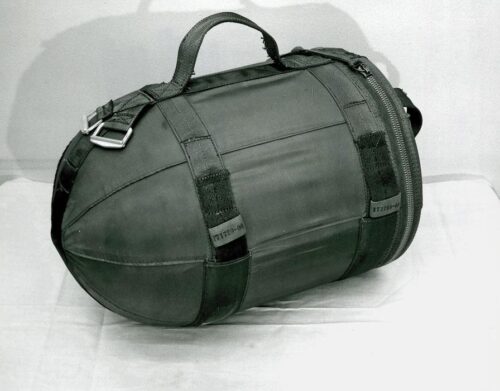
The SADM’s portability made it uniquely suited for demolition missions that conventional explosives could not accomplish. Destroying a massive concrete bridge or a hardened tunnel through the Alps, for example, would require enormous quantities of conventional explosives and extensive preparation time. A SADM, by contrast, could achieve the same effect with a single device placed by a small team. Approximately 300 SADMs were produced between the mid‑1960s and the late 1980s, and they remained part of U.S. nuclear planning throughout much of the Cold War.
Training and Operational Doctrine
Training for Green Light Teams was among the most demanding in the U.S. military. Operators were required to master a wide range of infiltration techniques, including high‑altitude, low‑opening (HALO) parachute jumps while carrying the SADM. Photographs from declassified archives show operators free‑falling with the device strapped between their legs, a method that required exceptional skill and nerve. Navy SEALs and underwater demolition teams trained to deliver SADMs via combat diving, allowing them to place devices on coastal infrastructure, harbor facilities, or underwater tunnels.
Beyond insertion techniques, operators trained extensively in nuclear demolition procedures, timing mechanisms, and escape‑and‑evasion tactics. Although survival was unlikely, doctrine still emphasized the importance of attempting to withdraw after emplacement. Teams practiced navigating hostile terrain, avoiding detection, and moving toward friendly lines or pre‑arranged extraction points. The reality, however, was that many missions were effectively one‑way operations, and operators understood the gravity of what they were preparing to do.
Strategic Logic in the Cold War Context
The development of SADMs and the Green Light Teams must be understood within the broader framework of Cold War nuclear strategy. During the 1950s and 1960s, the United States embraced a doctrine of “flexible response,” which sought to provide a range of nuclear and conventional options to counter Soviet aggression. Tactical nuclear weapons—smaller, battlefield‑scale devices—were seen as tools that could be used to slow or halt enemy advances without immediately escalating to full‑scale strategic nuclear exchange.
SADMs fit neatly into this doctrine. They offered a way to destroy critical infrastructure quickly and decisively, creating obstacles that could delay Soviet forces long enough for NATO to mobilize reinforcements. In mountainous regions such as the Alps or the Fulda Gap, even a short delay could have significant operational consequences. The mere existence of these devices also served as a deterrent, signaling to the Soviet Union that NATO had the capability to deny key terrain even under conditions of rapid enemy advance.
Secrecy and Public Revelation
For most of their operational life, the Green Light Teams and the SADM program were among the most closely guarded secrets in the U.S. military. Even within Special Forces, knowledge of the program was restricted to those directly involved. It was not until 1984 that the existence of portable nuclear demolition charges became publicly known, and even then, details remained sparse. The full scope of the program, including the training methods and mission profiles of the Green Light Teams, only became widely understood after the end of the Cold War and the declassification of key documents.
Decline and Termination of the Program
By the late 1980s, several factors contributed to the decline of the SADM program. Advances in precision‑guided conventional munitions reduced the need for portable nuclear demolitions. Concerns about nuclear proliferation, command‑and‑control vulnerabilities, and the safety of deploying small nuclear devices in forward areas also grew. Most importantly, the geopolitical landscape was changing rapidly. As tensions eased and the Soviet Union began to collapse, the rationale for such extreme measures diminished. The program was formally terminated between 1986 and 1989, and the remaining SADMs were dismantled.
Final Thoughts
The Green Light Teams and the Special Atomic Demolition Munition represent one of the most unusual and daring chapters in Cold War military history. Conceived during a time of intense geopolitical rivalry, these units embodied the willingness of the United States to consider extraordinary measures to deter or slow a potential Soviet invasion. Their missions required exceptional skill, courage, and acceptance of personal risk. Although the program ultimately became obsolete with the end of the Cold War, it remains a striking example of the lengths to which nations were prepared to go in the nuclear age. The legacy of the Green Light Teams serves as a reminder of both the ingenuity and the peril inherent in Cold War strategy, and it highlights the profound human dimension behind some of the era’s most secretive military plans.
